| Citation: | ZENG Xianju, YAN Jiangbing, SHI Qing. Inherent Laws and Evolutionary Logic of the Qualitative Transition of Productivity: A Re-examination of the Development Strategies for New Quality Productive Forces[J]. Journal of Guangdong University of Finance & Economics, 2026, 41(2): 31-42.

|

| [1] |
马克思. 政治经济学批判[M]. 中共中央马克思恩格斯列宁斯大林著作编译局, 译. 北京: 人民出版社, 1976.
|
| [2] |
习近平. 发展新质生产力是推动高质量发展的内在要求和重要着力点[J]. 求是, 2024(11): 4-8.
|
| [3] |
王巍. 新质生产力形成的唯物史观依据[N]. 光明日报, 2024-05-20(15).
|
| [4] |
蔡继明, 高宏. 新质生产力参与价值创造的理论探讨和实践应用[J]. 经济研究, 2024, 59(6): 15-28.
|
| [5] |
方敏, 杨虎涛. 政治经济学视域下的新质生产力及其形成发展[J]. 经济研究, 2024, 59(3): 20-28.
|
| [6] |
任保平. 生产力现代化转型形成新质生产力的逻辑[J]. 经济研究, 2024, 59(3): 12-19.
|
| [7] |
贺俊. 新质生产力问题的理论缺口与经济学的"异质性"分析视角[J]. 财贸经济, 2024, 45(8): 13-21.
|
| [8] |
黄群慧. 新质生产力与新型工业化[J]. 中国社会科学, 2024(6): 19-26.
|
| [9] |
中国社会科学院经济研究所课题组, 黄群慧, 杨耀武, 等. 结构变迁、效率变革与发展新质生产力[J]. 经济研究, 2024, 59(4): 4-23.
|
| [10] |
黄群慧, 盛方富. 新质生产力系统: 要素特质、结构承载与功能取向[J]. 改革, 2024(2): 15-24.
|
| [11] |
曾宪聚, 施青. 新质生产力三维生成机制: 以深圳新能源汽车产业为例[J]. 科研管理, 2025, 46(4): 63-71.
|
| [12] |
Aghion P, Antonin C, Bunel S. The power of creative destruction: economic upheaval and the wealth of nations[M]. Cambridge: Harvard University Press, 2021.
|
| [13] |
Phillips P C B, Sul D. Transition modeling and econometric convergence tests[J]. Econometrica, 2007, 75(6): 1771-1855. doi: 10.1111/j.1468-0262.2007.00811.x
|
| [14] |
方毅, 孟佶贤, 张屹山. 中国经济增长的状态跃迁(1979—2020)——基于复杂系统视角的研究[J]. 中国社会科学, 2022(5): 4-26, 204.
|
| [15] |
Foster R N. Working the s-curve: assessing technological threats[J]. Research Management, 1986, 29(5): 23-31
|
| [16] |
张会恒. 论产业生命周期理论[J]. 财贸研究, 2004(6): 7-11.
|
| [17] |
Aghion P, Howitt P. A model of growth through creative destruction[J]. Econometrica, 1992, 60(2): 323-351. doi: 10.2307/2951599
|
| [18] |
洪银兴. 新质生产力及其培育和发展. 经济学动态, 2024(1): 3-11.
|
| [19] |
马昀, 卫兴华. 用唯物史观科学把握生产力的历史作用[J]. 中国社会科学, 2013(11): 46-64, 203.
|
| [20] |
戚聿东, 徐凯歌. 技术革命、生产方式变革与企业组织结构调整[J]. 管理世界, 2024, 40(10): 1-16, 35.
|
| [21] |
贾根良. 第三次工业革命与工业智能化[J]. 中国社会科学, 2016(6): 87-106, 206.
|
| [22] |
谢伏瞻. 论新工业革命加速拓展与全球治理变革方向[J]. 经济研究, 2019, 54(7): 4-13.
|
| [23] |
Hobsbawm E. Industry and empire: the birth of the industrial revolution[M]. London: Penguin Books, 1999.
|
| [24] |
Hounshell D A. From the american system to mass production, 1800-1932: the development of manufacturing technology in the United States[M]. Baltimore: Johns Hopkins University Press, 1984.
|
| [25] |
Saxenian A. Regional advantage: culture and competition in Silicon Valley and Route 128[M]. Cambridge, MA: Harvard University Press, 1994.
|
| [26] |
国家知识产权局.2024年中国知识产权强国建设进展情况[R/OL].(2025-04-24)[2026-03-07].
|
| [27] |
国家统计局, 科学技术部, 财政部.2024年全国科技经费投入统计公报[R/OL].(2025-09-29)[2026-03-16].
|
| [28] |
张新宝. 论作为新型财产权的数据财产权[J]. 中国社会科学, 2023(4): 144-163, 207.
|
| [29] |
田轩.中国风投存续期仅为美国一半, 如何培养"耐心资本"[N/OL].(2026-01-15)[2026-03-05].
|
| [30] |
曾宪聚, 施青. 我国新兴产业规模化发展: 内生动力与制度优化[J]. 深圳大学学报(人文社会科学版), 2026, 43(2): 1-10.
|
| [31] |
印剑, 夏惟怡, 曹向. 新质生产力赋能全球价值链跃升的理论逻辑与推进路径[J]. 广东财经大学学报, 2025, 40(2): 83-89.
|
| [32] |
徐明, 陈斯洁, 于静涛. 科技创新政策、研发投入与关键核心技术攻坚[J]. 中国工业经济, 2025(9): 118-136.
|
| [33] |
国家统计局.服务业实现较快增长发展质效持续提升[EB/OL].(2025-01-17)[2026-04-07].
|
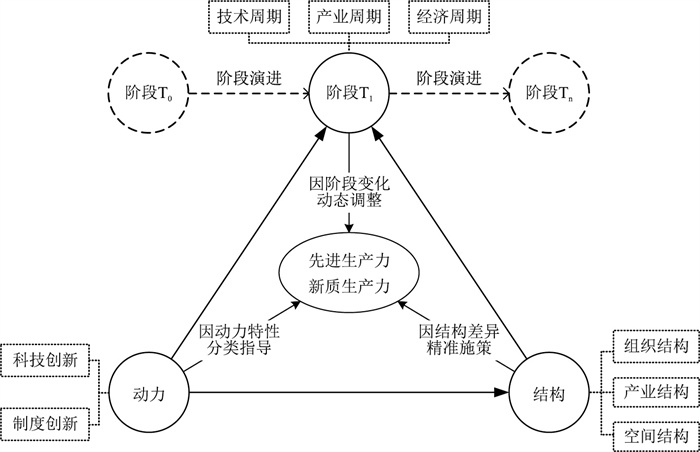
Figures(1)



 DownLoad: